UV DTF Stickers for Hard, Non-Porous Surfaces
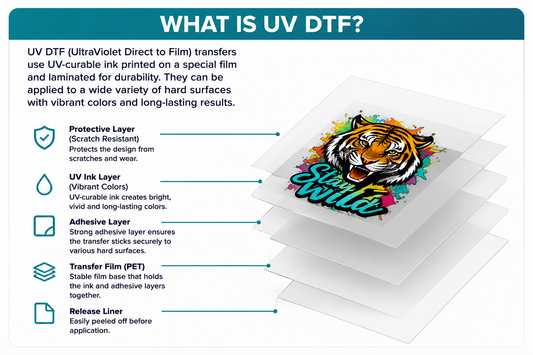
UV DTF is a different product from regular DTF, not a variant of it. It goes on hard surfaces by hand, with no heat press involved at all, and it does not work on fabric.
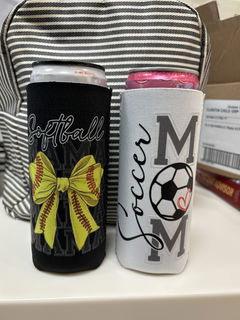
These bond to smooth non-porous surfaces: glass, coated metal, ceramic, acrylic, and hard plastic. Tumblers, jars, phone cases, laptop panels, signage, and packaging are the usual jobs. They do not work on fabric, and they do not work on silicone.
Build a UV sheet with the UV DTF gang sheet builder, or read the UV DTF guide first if this is your first order.
Build a UV DTF Sheet
Call (657) 439-0180
How Application Works Without Heat
A UV DTF transfer comes as a two-layer sandwich. You position it on the clean surface, burnish it down firmly, then peel the top carrier away leaving the print behind. There is a working window of roughly 15 to 20 seconds during application.
That window is the thing to plan around. Position before you commit, because a transfer that goes down crooked does not lift and reposition cleanly. On curved items such as tumblers, work from the centre outwards to push air ahead of you rather than trapping it.
Surface Prep Is the Whole Job
Cleanliness is the single biggest factor in how long a UV DTF sticker lasts. Wash the item, then wipe with isopropyl alcohol and let it dry fully. Skin oil from handling the surface is enough to cause an edge to lift weeks later.
Texture is the second factor. A frosted, hammered, or powder-coated surface gives less contact area than smooth glass, so adhesion is weaker and life is shorter. Flexible substrates have the same problem, because the print does not flex with them indefinitely.
Washing and Durability, Honestly
We recommend hand washing. Supplier guidance on dishwasher use genuinely conflicts between manufacturers, with some claiming their film survives it and others advising against it, so we are not going to give you a confident answer that the sources do not support.
What is consistent across sources is that heat, prolonged soaking, and abrasive scrubbing all shorten adhesion life. If the item is going to see a dishwasher regularly, treat UV DTF as a decorative finish rather than a permanent one.
Same-day cutoff
Order by 12:00pm (noon) on a business day and it prints that day.
Press settings
280 to 300°F (138 to 149°C), medium pressure, about 6 KG.
Priced by area
Cost follows film area, not colour count. Unlimited colours cost the same as one.
Printed in Anaheim
In-house at 1911 E Ball Rd, Anaheim, CA. Not brokered out.
Frequently asked questions
Do UV DTF stickers need a heat press?
No. They apply by hand at room temperature. You burnish the transfer down, then peel the carrier layer off. No press, no heat, no curing step on your end.
Can I put UV DTF on fabric?
No. UV DTF bonds to hard non-porous surfaces only. For fabric you want regular DTF transfers, which are a different product with a different application process.
Are UV DTF stickers dishwasher safe?
Supplier sources genuinely disagree on this, so we recommend hand washing rather than making a claim the evidence does not support. Heat and prolonged soaking shorten adhesion life on any UV DTF film.
What surfaces work best?
Smooth glass, ceramic, coated metal, acrylic, and hard plastic. Textured surfaces such as frosted glass or powder coating give less contact area, so adhesion is weaker. Silicone does not work at all.
Order UV DTF before noon
Arrange your designs on a UV sheet and check out before 12:00pm noon on a business day for same-day printing. New to UV DTF? Read the guide first, it covers the application window in detail.
Build a UV DTF Sheet
Contact the shop